Museum of Love
“For people living with dementia and those who love them, connection can require new ways of understanding, communicating and caring.”
Explore the Project
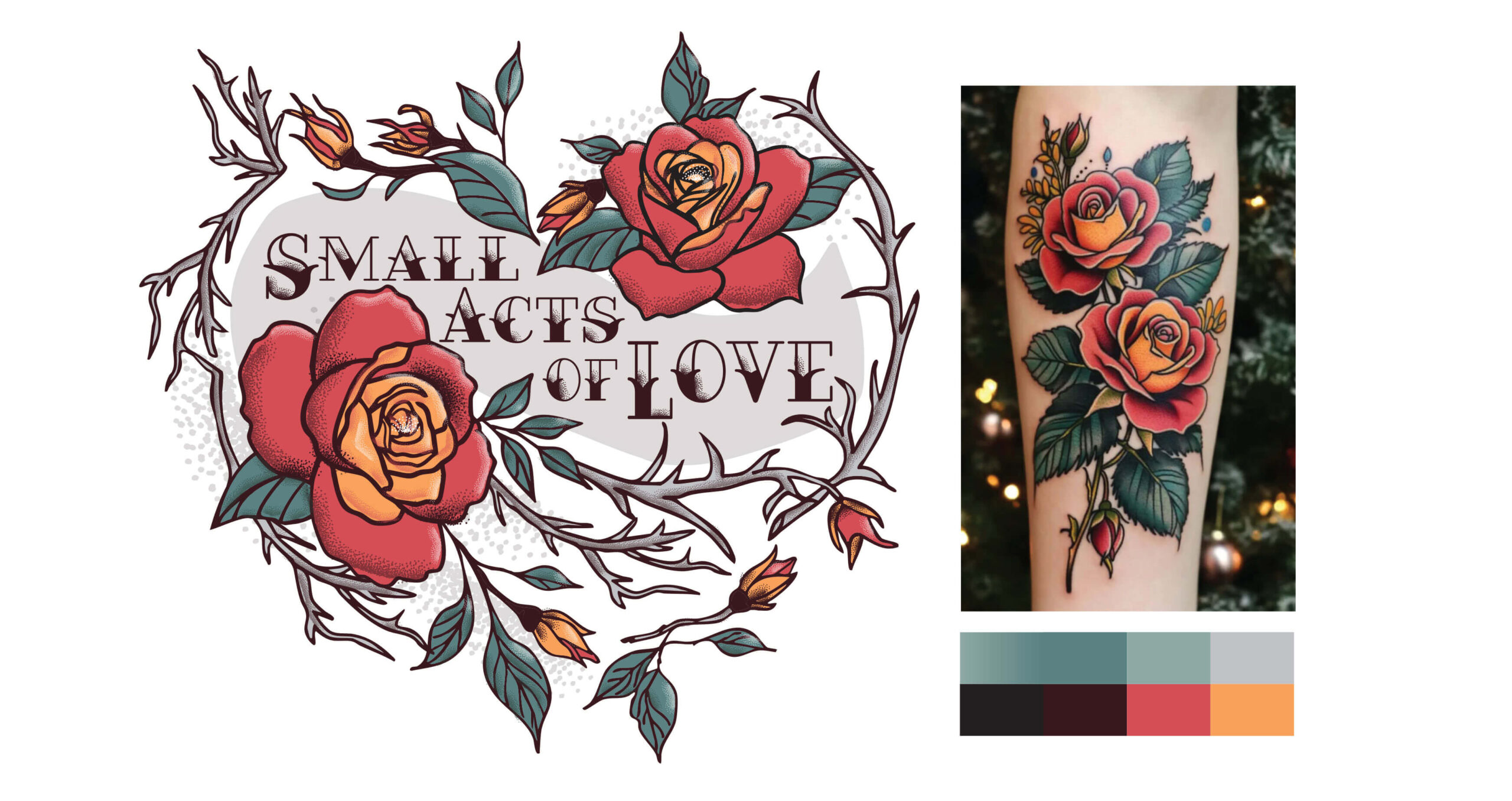
Working with Celebrate Ageing’s Museum of Love, Designosaur initially developed an illustration-led visual identity for Small Acts of Love and then extended the project to a related family of campaign marks.
The challenge was to make space for both the tenderness and the difficulty of changing relationships—without romanticising dementia or losing sight of the people behind the stories.
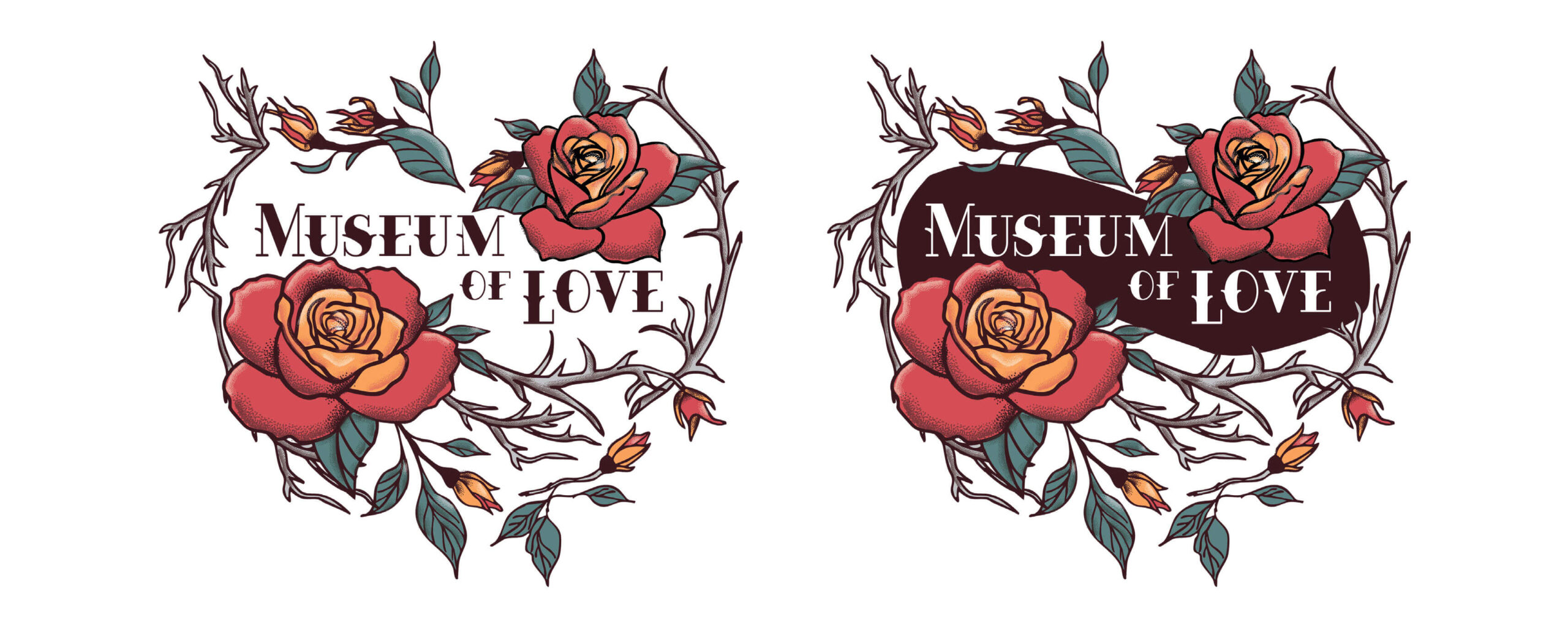
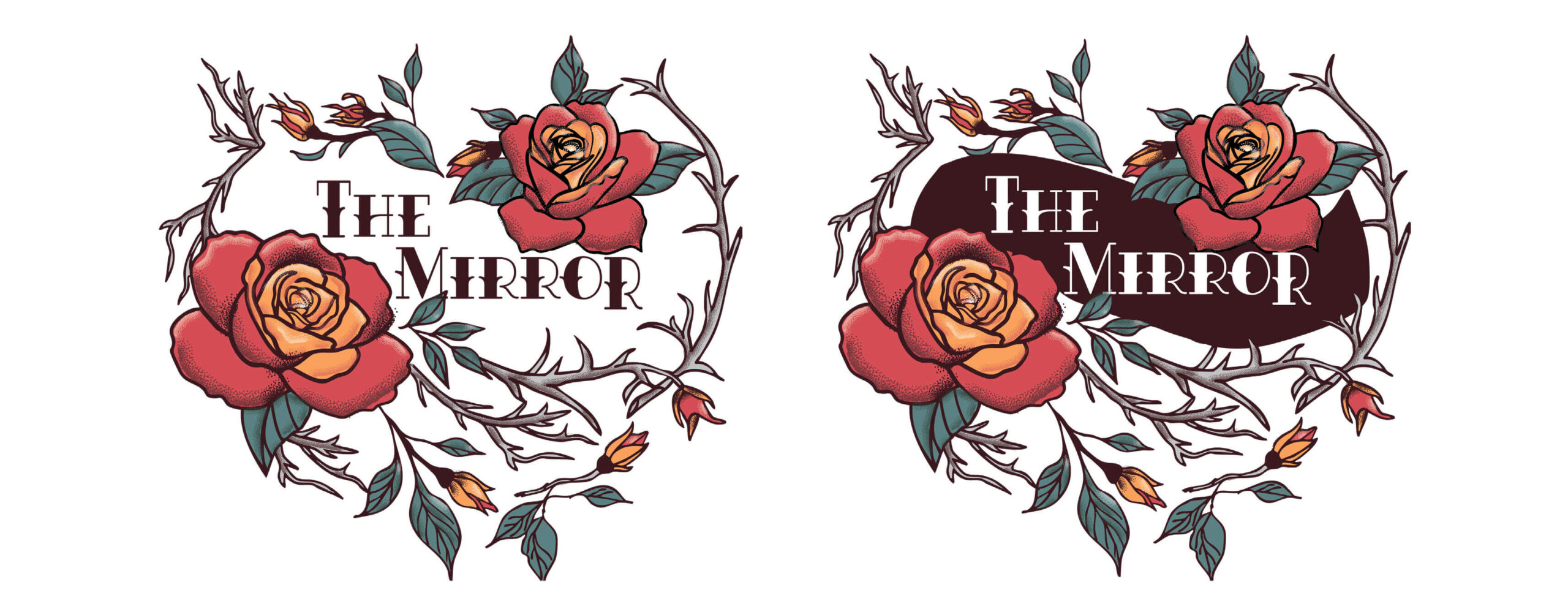
The creative direction drew on a rose-and-thorns symbol already central to the Museum’s approach. The rose represents love, the thorns the changes and challenges dementia can bring, and the leaves the practical strategies people develop to sustain connection.
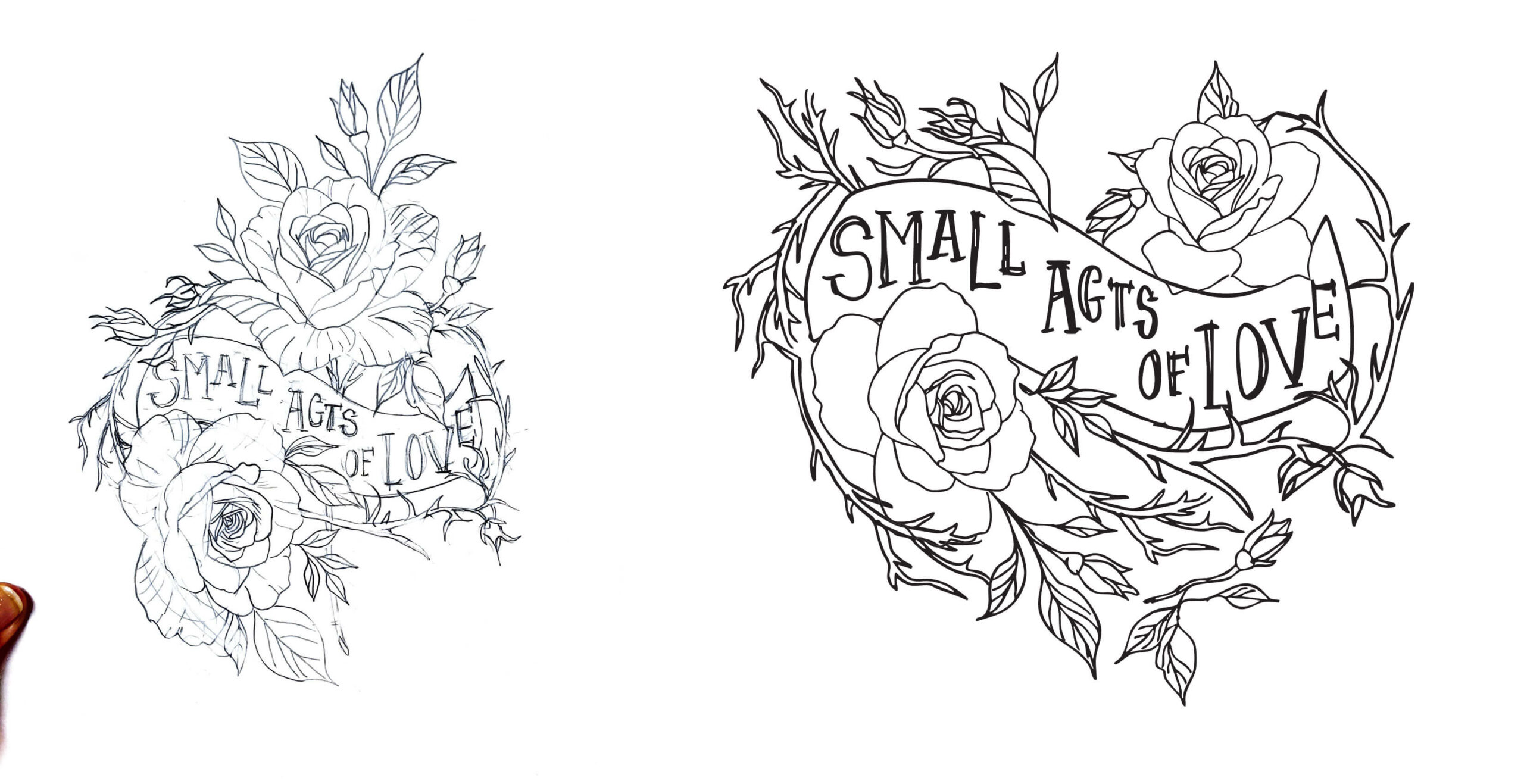
A hand-drawn, tattoo-inspired treatment gives that metaphor a distinctive visual presence, combining bold colour, intricate botanical forms and characterful typography.
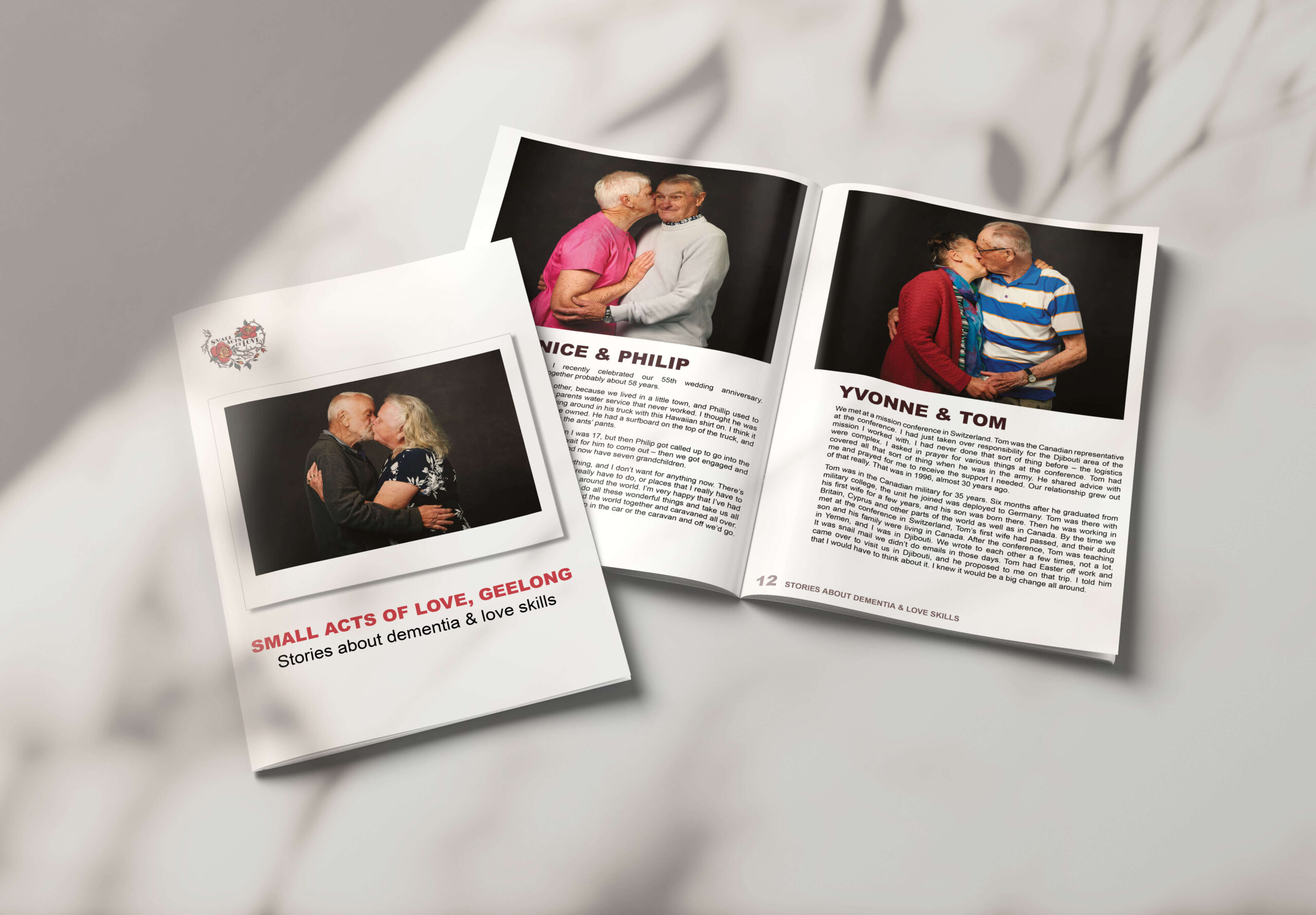
The identity extended into The Kiss, a portrait-led exhibition celebrating human connection, and a coordinated Museum of Love identity suite. It also appears in Small Acts of Love, Geelong: Stories about dementia & love skills, a published resource bringing together participant stories, photographs and insights from the community project.


Inside the Design
The development work progressed from existing Museum of Love references and photographic research through mood boards, pencil sketches, illustration refinement, colour exploration and final identity artwork.
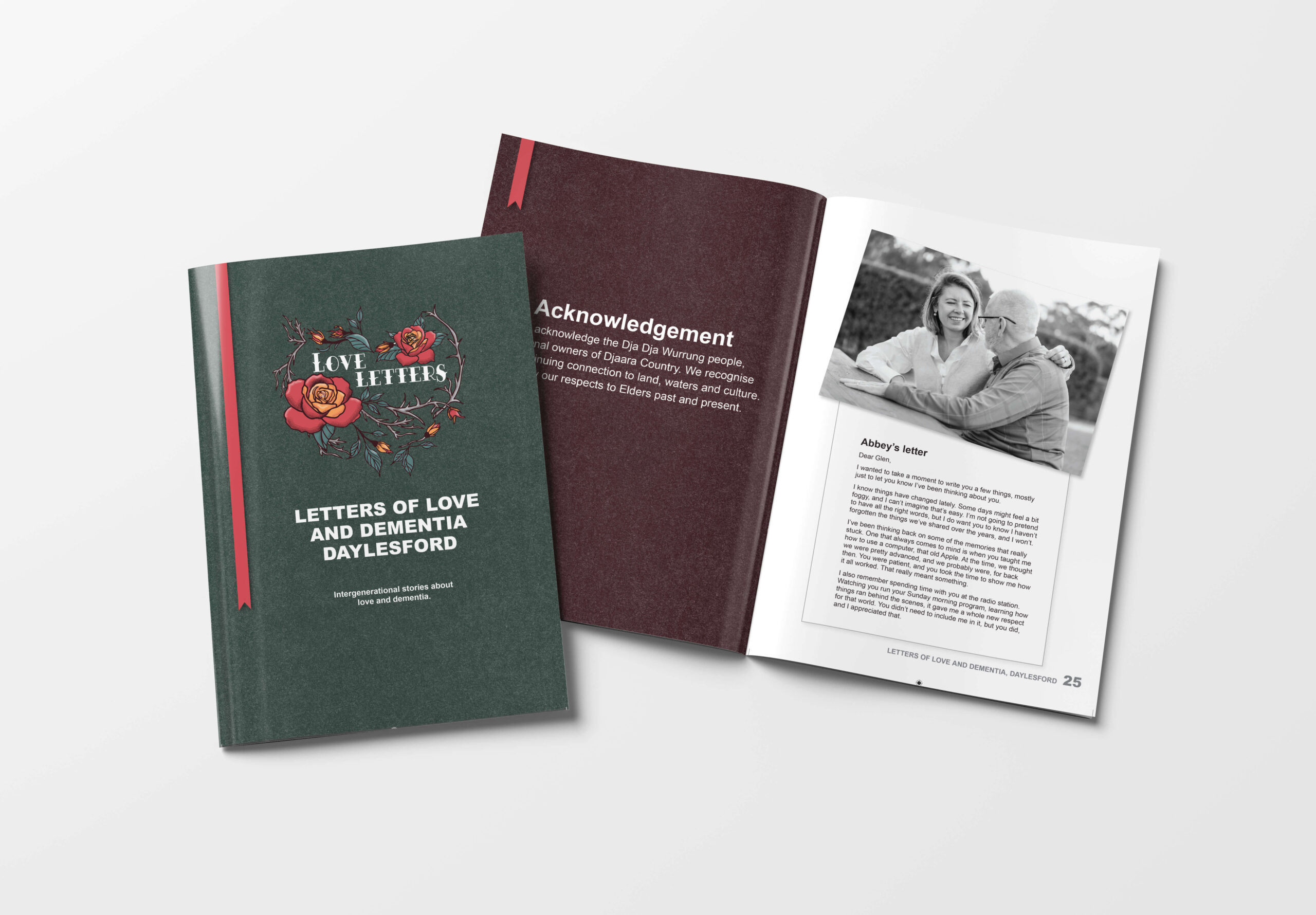
Related marks for Museum of Love, Small Acts of Love, The Kiss, The Mirror and Love Letters use a shared visual language while retaining individual titles.
Design in the Wild
The Small Acts of Love, Geelong report documents a community project led by Australian Multicultural Community Services in partnership with Celebrate Ageing’s Museum of Love, with The Kiss photographs exhibited at Vines Road Community Centre for Valentine’s Day 2026.
The Letters of Love and Dementia Daylesford project aims to help combat dementia stigma that can result in the isolation of people living with dementia and their families – at a time when they most need human connection.